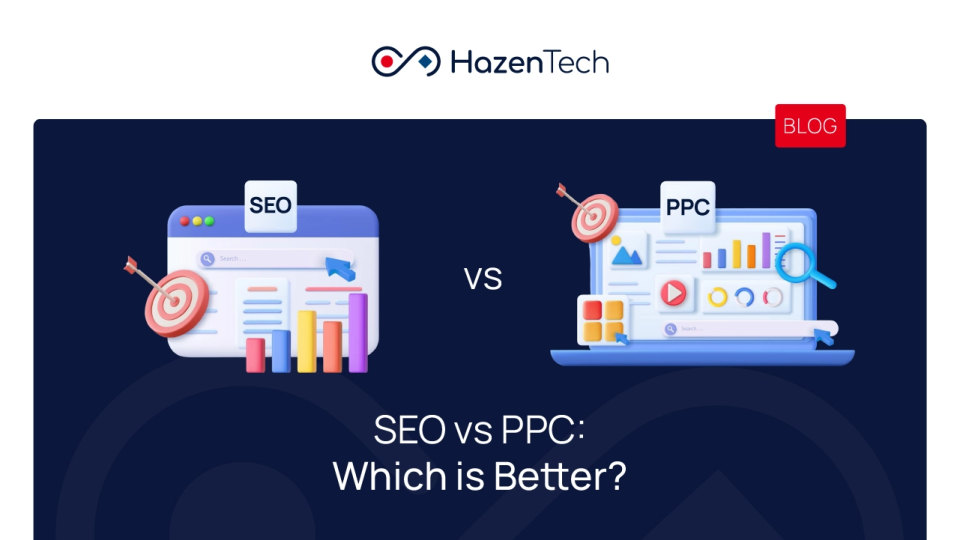
Search engine optimization or pay-per-click? If you’re a digital marketer, you may have come across this confusion, especially when working on a client’s project. And, honestly, I did too. The good news is, I’ve gained significant experience in SEO and PPC campaigns over the years, and I’m going to help you decide which one is best for your project.
So, here’s what we’re going to do:
- Learn what SEO and PPC are
- Why do they matter in digital marketing
- How to perform SEO and PPC
- Which vertical fits where
- Pros and cons of each
- How to strategize your marketing approach
Let’s get started!
What is SEO?
SEO stands for search engine optimization. It’s a process of improving a website’s technical structure, content quality, keyword relevance, and online authority to rank higher in organic search results. SEO includes on-page optimization, link building, user experience improvements, and content strategies that increase visibility, traffic, and conversion potential.
Why does SEO matter?
SEO matters in marketing, and there are multiple reasons why you need to focus on optimizing your website. Here’s how SEO provides value.
1. SEO Helps People Actually Find You
If your website isn’t showing up when people search, it’s basically invisible. SEO makes sure you’re discoverable at the exact moment someone needs what you offer. It’s just aligning your content with what people are typing into Google every day.
2. Organic Traffic Beats Paid Ads Long-Term
Paid ads stop the second you stop paying, but SEO keeps bringing people in once your pages are indexed. When your site ranks, you earn steady traffic from people actively searching, not because you forced an ad in their face. It’s the closest thing to “free marketing” you’ll ever get online.
3. Good SEO Builds Trust Instantly
People trust Google’s top results more than the brands themselves. If your page is organically ranking higher, it makes your brand/website look legit. It signals credibility, authority, and that you’re not some shady website from 2007. Strong SEO quietly boosts your reputation and establishes your topical authority across your niche.
4. SEO Helps You Understand Your Audience
When you study keywords and search behavior, you learn exactly what people want, what they’re confused by, and what problems they’re trying to solve. SEO basically hands you a cheat sheet to your customers’ minds. Once you know that, every part of your marketing becomes smarter and sharper.
5. Better SEO Improves User Experience
Search engines love sites that load fast, feel easy to explore, and answer questions quickly. In other words, SEO forces you to build a pleasant, frustration-free experience. And guess what? Users love that too. Happy visitors stay longer, browse more, and actually take action on your site.
6. SEO Gives You an Edge Against Competitors
Your competitors are getting traffic, leads, and sales from Google every single day. SEO helps you steal that attention. Even ranking one spot above someone can shift thousands of clicks to you instead of them. It’s a quiet but powerful competitive advantage.
7. SEO Supports Every Other Marketing Channel
Your paid ads get cheaper when your site is more relevant. Your social media gets more traction when people Google you later and find you easily. Your content performs better because it’s optimized. SEO doesn’t work alone; in fact, it boosts everything else you do.
8. SEO Drives Higher-Intent Traffic
People who search for something are already halfway sold. They’re looking for solutions, comparisons, or places to buy. SEO lets you show up right when they’re ready to make a decision. This means warmer leads, higher conversions, and fewer cold “convince me” conversations.
9. SEO Helps You Adapt to Market Shifts
Search trends change fast. When you’re actively doing SEO, you can see new patterns early, like what people want more of, what they’re Googling less, and where opportunities are opening up. It’s like having market research built directly into your content strategy. You can use Google Trends to view and compare marketing trends.
10. SEO Is One of the Best Long-Term Investments
Unlike ads or one-off campaigns, SEO keeps paying you back for months or even years. Once you build authority, your site can hold strong rankings with minimal maintenance. It’s slow at first, but when it compounds, the results are ridiculously worth it.
What are the Main Components of SEO?
1. Keyword Research
What is it?
Keyword research is the process of finding the exact words, questions, and phrases people type into Google. This tells you what content to create and what users expect to see when they search.
Why does it matter?
If you choose the wrong keywords, your content ranks for things nobody cares about. If you choose the right keywords, Google sees your page as the correct answer and pushes you to Page 1.
Technical concepts you MUST understand
Terms | Definition |
Search Volume | How many times a keyword is searched per month. High volume = more potential traffic. |
Keyword Difficulty (KD) | A score (0–100) showing how hard it is to rank. Higher = more competition. |
Search Intent | Why is someone searching:
|
CPC | Cost Per Click. High CPC = high commercial value. |
SERP Features | Featured Snippets, “People Also Ask,” videos, Local Pack, etc. |
Parent Keyword (PK) | The primary root keyword from which various long-tail keywords originate. |
Long Tail Keywords | Longer, specific phrases (easier to rank, higher intent). |
2. On-Page SEO
What is it?
On-page SEO focuses on optimizing everything visible and readable on your website, from your content to your HTML elements. It makes your pages clear, organized, and contextually relevant so Google fully understands what you’re offering.
Why does it matter?
Search engines evaluate signals, and on-page SEO has a lot to tell, including:
- What your page is about
- Whether it satisfies user intent
- How trustworthy and quality-driven your content is
- How well-structured and readable your page is
- Whether it deserves to rank above PPC ads and competitors
Good on-page SEO improves your relevance score, keeps users engaged longer, and increases your chance of ranking organically, which means more traffic and no need to spend on clicks.
Key Components of On-Page SEO
A. Keyword Placement & Relevance Signals
This is about strategically using your primary and secondary keywords in areas Google scans first: title tag, headers, intro, image alt text, and body content.
Important concepts here include:
- Search Intent: matching the purpose behind the keyword.
- Keyword Difficulty (KD): shows how competitive a keyword is.
- Search Volume: tells how many people search that term monthly.
- Semantic Keywords: related terms that strengthen meaning.
If your content doesn’t align with the search intent (informational vs. transactional), Google will downgrade your relevance immediately.
B. Title Tag & Meta Description
These tell Google (and users) exactly what the page is about.
- Title Tag: direct ranking factor; must reflect the main topic.
- Meta Description: not a ranking factor but affects click-through rate, which indirectly tells Google your page is worth showing.
Stronger click-through = more organic traffic without ad spend.
C. Header Structure (H1, H2, H3)
Headers help Google understand how your content is organized. A clear hierarchy shows:
- Which part is the main idea (H1)
- Which parts are supporting sections (H2, H3)
This also improves readability, reduces bounce rate, and signals content depth.
D. Content Quality & E-E-A-T
Google rewards content that demonstrates:
- Experience
- Expertise
- Authoritativeness
- Trustworthiness
This includes factual accuracy, depth, clarity, and usefulness.
High-quality content increases dwell time, which sends strong ranking signals — something PPC can’t replicate.
E. Internal Linking
This connects your pages together so Google can understand your site structure.
Benefits include:
- Passing authority between pages
- Helping Google crawl deeper
- Guiding users to related content
- Improving session duration
Internal linking builds topical authority — the backbone of SEO.
F. Image Optimization
Google relies on alt text, file names, and compression to interpret images.
These elements impact:
- Accessibility
- Page load speed (a ranking factor)
- Visibility in Google Images
- Topical relevance
Optimized images quietly strengthen your SEO score without extra effort.
G. URL Structure
Clean, keyword-focused URLs help Google understand context instantly.
Short, descriptive URLs also perform better in search results and look more trustworthy to users.
H. External Links (Outbound Authority Links)
When you reference credible external sources, it supports:
- better credibility
- stronger topical relevance
- improved trust signals
Google sees your page as well-researched and authoritative.
I. Schema Markup (Structured Data)
This is metadata that helps Google interpret your content more accurately.
Types include:
- Article
- FAQ
- Product
- Local Business
Schema can improve your visibility through rich results, which increases organic clicks without paying for PPC ads.
In short:
On-page SEO builds clarity, trust, and relevance, three things PPC cannot replace.
PPC gets you visibility instantly, but on-page SEO builds long-term value, ranking power, and user trust.
3. Off-Page SEO
What is it?
Off-page SEO covers every signal that happens outside your website but still influences how Google ranks you. Think of it as your brand’s reputation score on the internet, the authority, trust, and credibility you build across external platforms.
Why does it matter?
Google’s core ranking philosophy is simple:
“If the internet trusts you, you deserve to rank.”
Off-page signals help Google understand:
- Whether your brand is credible
- Do other sites vouch for your content
- People mention you or look for you online
- If you have authority in your niche
- Does your presence extend beyond your own website
Key Components of Off-Page SEO
A. Backlinks (Authority Votes)
Backlinks are links from other websites pointing to yours, and they’re the strongest off-page ranking factor. Google sees them as “votes of confidence.”
Important terms:
- Domain Authority / Domain Rating: Predicts a site’s ranking strength.
- Relevance: Links from related niches carry more value.
- Anchor Text: clickable text that helps Google understand context.
- Natural vs. Manipulated Links: unnatural patterns can trigger penalties.
High-quality backlinks increase your authority score, making it easier to outrank competitors organically.
B. Brand Mentions (Even Without Links)
Google now tracks implied links, mentions of your brand, even without a URL.
These signals tell Google:
- People are talking about you
- Your name appears in relevant discussions
- Your brand has recognition and influence
PPC never builds long-term brand equity this way.
C. Social Signals & Shareability
While social signals (likes, shares, comments) aren’t direct ranking factors, they:
- Amplify content reach
- Accelerate indexing
- Generate organic backlinks naturally
- Improve brand visibility and search demand
When content spreads, SEO benefits kick in automatically.
D. Online Reputation & Reviews
For businesses (especially local ones), reviews on platforms like:
- Google Business Profile
- Yelp
- Facebook
- Industry directories
…play a major role in search visibility.
Strong reviews boost trust, NAP consistency, and local ranking authority.
E. Content Distribution & PR
This includes:
- Press releases
- Digital PR campaigns
- Guest articles
- Thought leadership content
- Podcast features
- Mentions in news outlets
These build credibility, authority, and high-value backlinks, all of which are pillars of off-page strength.
F. Forum, Community, and Q&A Presence
Platforms like Reddit, Quora, niche forums, Slack groups, and Discord communities help:
- Build topical authority
- Generate referral traffic
- Create brand familiarity
- Seed natural backlinks
- Signal to Google that your brand participates in conversations
G. Business Citations & Directory Listings
Citations are external listings that include your business name, address, phone (NAP), and website.
They improve:
- local SEO
- trust signals
- consistency across the web
- visibility in local pack rankings
Accuracy matters because inconsistencies confuse Google’s local algorithms.
H. Influencer & Partnership Signals
Mentions or endorsements from influencers (even micro-influencers in niche industries) create authority overlaps.
Google reads these as:
- Brand relevance
- Social proof
- Community validation
Think of it like modern word of mouth for SEO.
In short:
Off-page SEO is everything that proves your brand is credible, trusted, talked about, and worth ranking.
SEO wins long-term because off-page signals build authority over time, and that’s something PPC can’t replicate, no matter how much budget you throw at it.
4. Technical SEO
What is it?
Technical SEO focuses on how well your website can be crawled, indexed, understood, and served by search engines.
It’s basically the engine room of SEO, where everything beneath the surface determines whether Google can access and trust your pages.
Why does it matter?
You can write the best content in the world…
…but if Google can’t crawl it, can’t understand it, or thinks it loads too slowly?
You’re invisible.
Technical SEO ensures:
- Search engines can navigate your site
- Pages load fast
- Your structure makes sense
- Mobile version is clean
- Site is secure
- Google knows which pages matter and which ones shouldn’t rank
It’s not glamorous, but it’s one of the biggest ranking drivers, especially now that Google’s algorithm heavily rewards speed, stability, and clean architecture.
Key Components of Technical SEO
A. Crawlability
This is how easily search engine bots can move through your website.
Key elements include:
- Robots.txt: tells crawlers which pages to access or avoid.
- Crawl Budget: how many pages Google chooses to crawl on your site.
- Internal Linking Structure: helps bots discover deeper pages.
If Google can’t crawl a page, it cannot rank. Period.
B. Indexing
Indexing determines whether your content is stored and searchable in Google’s database.
Important factors:
- No-index tags: used to block low-value pages intentionally.
- Canonical Tags: tell Google which version of a page is the “official” one.
- Duplicate Content Management: stops diluted ranking signals.
Proper indexing is the difference between pages existing and pages performing.
C. Site Architecture & URL Structure
A clean structure helps both users and crawlers understand how your site is organized.
Best practices include:
- Clear parent → child hierarchy
- Short, descriptive URLs
- Avoiding orphan pages (pages with no internal links)
- Logical categorization
A good structure improves crawl efficiency and clarity of ranking.
D. Page Speed & Core Web Vitals
Google cares about how your site feels to users.
Core Web Vitals measure:
- LCP (Largest Contentful Paint): how fast your main content loads
- FID / INP: interaction responsiveness
- CLS: layout stability
Slow pages increase bounce rates and kill rankings. Technical SEO ensures your site loads quickly and smoothly.
E. Mobile Friendliness
Over 60% of global web traffic is mobile.
Google uses a mobile-first index, meaning it looks at your mobile version before anything else.
Technical SEO makes sure your mobile experience is:
- Responsive
- Readable
- Fast
- Free of broken layouts
If your mobile site suffers, your entire SEO suffers.
F. HTTPS & Security
Google will not rank insecure websites well.
HTTPS = encrypted, trusted, safe.
Technical SEO ensures:
- SSL certificates are active
- Mixed content errors are resolved
- Security vulnerabilities don’t impact crawlability
This also influences user trust, another indirect ranking factor.
G. XML Sitemaps
Your sitemap is like handing Google a map of your entire website.
It tells search engines:
- What pages exist
- What’s new
- What’s important
- How your content is structured
A well-maintained sitemap boosts indexing speed and accuracy.
H. Structured Data (Schema Markup)
Schema markup helps search engines understand context, meaning, and relationships within your content.
Examples:
- FAQ schema
- Product schema
- Review/Ratings schema
- Article schema
This yields rich results (stars, FAQs, product info) that boost CTR and topical relevance.
I. Canonicalization
This prevents issues when multiple URLs show the same content.
Without canonical tags, Google might:
- Index duplicates
- Split link equity
- Get confused about which page to rank
Technical SEO consolidates signals so your strongest version wins.
J. Technical Health Issues
Things like:
- Broken links
- Redirect chains
- 404 pages
- Soft 404s
- Server errors (5xx issues)
- JavaScript rendering problems
These errors drag down rankings and user experience. Technical SEO keeps your infrastructure clean.
In short:
Technical SEO is everything that allows your content to be discoverable, accessible, understandable, and competitive in Google’s ecosystem.
It’s the backbone that PPC cannot replicate you can pay for visibility, but you cannot pay your way out of a technically broken website.
5. Content Strategy
What is it?
Content strategy is the blueprint for everything you publish online — what you create, why you create it, who it’s for, and how it supports long-term organic growth.
It’s not just “writing blogs.” It’s the full system behind planning, producing, optimizing, and updating content so search engines see your site as a trustworthy, authoritative resource.
Why does it matter?
Google ranks content based on usefulness, clarity, authority, and completeness.
When your content strategy is strong, you’re not guessing — you’re intentionally building pages that:
- Match what users search for
- Match how Google evaluates relevance
- Match what your competitors are doing (and failing to do)
Content strategy is the heart of SEO, because SEO doesn’t exist without high-quality, purpose-driven content.
Key Components of a Strong SEO Content Strategy
A. Topic Clusters & Search Intent
Think of topic clusters as “content neighborhoods.”
You don’t just write one article on a topic; you build a whole ecosystem around it.
A strong content strategy maps:
- Primary topics (pillars)
- Supporting subtopics (cluster pages)
- User intent (informational, commercial, transactional, navigational)
Why it matters:
Google rewards sites that demonstrate topical authority.
If you deeply cover a subject from multiple angles, you become the “expert” in that niche, and your rankings rise across the board.
B. E-E-A-T (Experience, Expertise, Authoritativeness, Trustworthiness)
Google cares about who is producing your content and why they’re credible, especially in niches like legal, finance, and health.
Content strategy includes:
- Author bios
- Citations and credible data
- Clear firsthand experience
- Transparent sourcing
- Accurate, updated information
Why it matters:
Google rewards sites that demonstrate topical authority.
If you deeply cover a subject from multiple angles, you become the “expert” in that niche, and your rankings rise across the board.
C. Content Formats & Their Role in SEO
A practical strategy doesn’t rely on one format. It chooses formats based on intent:
- Blog posts → educate, attract traffic
- Landing pages → convert, rank for commercial keywords
- Guides & tutorials → build authority
- Case studies → prove credibility
- Product/service pages → rank for money keywords
- FAQ pages → grab long-tail intent
- Video scripts → support YouTube + on-page ranking
- Infographics & visuals → increase dwell time and backlink potential
Each format serves a purpose. Strategy tells you when and why to use each.
D. Content Depth, Structure & Readability
Google doesn’t want shallow content. It wants content that fully answers the user’s question without fluff.
Great SEO content includes:
- clear headers (H2s, H3s)
- scannable structure
- definitions, examples, comparisons
- data-backed claims
- actionable insights
This improves user satisfaction, which directly impacts rankings.
E. Competitor & SERP Analysis
A strong strategy studies what’s already ranking before creating anything.
You analyze:
- What topics competitors cover
- What they don’t cover (opportunity gaps)
- The type of content dominating the SERP
- The word count and structure Google prefers
- Which keywords are they missing
This ensures your content isn’t just “good”, it’s better than what already exists.
F. Content Refreshing & Updating
SEO is not “publish and forget.”
Search results shift, competitors update, algorithms change.
A real strategy includes scheduled updates to keep your pages:
- accurate
- relevant
- competitive
- aligned with new search patterns
Updated content almost always sees ranking improvements.
G. Internal Linking Strategy
Content strategy also dictates how pages link to each other.
Good internal linking:
- Strengthens topical relationships
- Passes authority from essential pages to new ones
- Guides Google’s crawl path
- Improves user navigation
Think of internal links as your site’s highway system.
Without it, your content exists in isolated pockets.
H. Content Quality Signals Google Looks For
Your strategy must ensure every page reflects clear quality signals:
- originality
- accuracy
- depth
- structure
- consistent tone
- strong keyword alignment
- helpful visuals or examples
- absence of fluff or filler
These signals tell Google, “This content solves the problem better than others.”
I. How Content Strategy Supports SEO (The Benefit Summary)
A strong content strategy:
- Builds topical authority
- Improves rankings across entire categories
- Increases organic traffic
- Enhances user trust
- Attracts backlinks naturally
- Reduces dependency on PPC
- Drives predictable, compounding long-term growth
In SEO vs PPC, content strategy is the long-game advantage PPC cannot compete with.
Ads stop when the money stops.
Content keeps ranking, compounding, and converting for years.
How PPC Actually Works?
Before people start arguing “SEO vs PPC,” it’s important to actually understand what PPC is and how it functions behind the scenes. A lot of marketers treat PPC like a magic switch: pay money, get traffic, get sales. That’s not wrong, but it’s only half the story.
PPC (Pay-Per-Click) is a paid advertising model where you bid for visibility on search engines, social platforms, or websites. You only pay when someone clicks your ad. Sounds simple. In reality, PPC is a system built on auctions, relevance, intent, and constant optimization.
Unlike SEO, PPC doesn’t wait for authority or time to compound. You turn it on, and you show up instantly.
What Is PPC?
PPC stands for Pay-Per-Click advertising. It allows businesses to place ads at the top of search engines (Google, Bing) and social platforms (Meta, LinkedIn), as well as across display networks. You bid on keywords or audiences, and your ad competes in real time every time someone searches or scrolls.
The most common example is Google Search Ads. When you search for something like “best accounting software for small businesses”, the first few results are usually ads. Those advertisers pay Google every time someone clicks.
The key thing to understand:
PPC rents visibility.
Why Does PPC Matter in Digital Marketing?
PPC exists because businesses don’t always have time to wait.
SEO is powerful, but it takes months to build traction. PPC fills that gap. It gives you speed, control, and predictability, as long as you’re willing to pay for it.
Here’s why PPC still plays a major role in marketing strategies:
Instant Visibility | You don’t need authority, backlinks, or six months of content. Launch a campaign today, and your ad can appear on page one today. |
High Intent Targeting | PPC lets you target users who are actively searching to buy, compare, or take action. You’re not interrupting them. You’re catching them at the moment of intent. |
Full Control Over Messaging | You control the headline, the copy, the landing page, and the offer. No algorithm guessing what your page is about. You tell the platform exactly what to show. |
Scalable (With Budget) | Want more traffic? Increase the budget. Want less? Pause the campaign. PPC scales linearly with spend, which makes it predictable, but also expensive over time. |
Testing & Validation | PPC is often used to test: New offers New keywords New markets Conversion messaging |
If something doesn’t convert, you know fast.
Now let’s break down how PPC actually works, component by component, just like we did with SEO.
Main Components of PPC
1. Keyword Targeting & Intent
At the core of search-based PPC is keywords.
You bid on search terms people type into Google. But just like SEO, not all keywords are equal.
Important concepts you must understand:
Search Intent
- Informational: usually expensive and low-converting
- Commercial: comparison-driven
- Transactional: highest conversion intent
PPC works best when you focus on commercial and transactional intent. Paying for clicks from people “just researching” burns budget fast.
Match Types
- Broad match: widest reach, highest waste
- Phrase match: controlled relevance
- Exact match: highest intent, lowest volume
Choosing the wrong match type is one of the fastest ways to lose money in PPC.
2. The Ad Auction (This Is Where Most People Get It Wrong)
PPC is not “highest bidder wins.”
Every time someone searches, Google runs an auction in milliseconds. Your ad’s position depends on Ad Rank, not just budget.
Ad Rank is calculated using:
- Your bid
- Quality Score
- Expected click-through rate
- Ad relevance
- Landing page experience
This is why poorly written ads with bad landing pages still lose, even with high budgets.
Money gets you entry. Relevance wins placement.
3. Quality Score (The Backbone of PPC Performance)
Quality Score is Google’s way of rewarding relevance.
It’s influenced by:
- How closely your ad matches the keyword
- How often users click your ad
- How useful your landing page is
- Page speed and mobile usability
A higher Quality Score:
- Lowers cost per click (CPC)
- Improves ad placement
- Increases impression share
This is where PPC starts to overlap with SEO.
A bad website makes PPC expensive.
4. Ad Copy & Creative
Your ad copy determines whether someone clicks or ignores you.
Key elements include:
- Headlines that match search intent
- Clear value proposition
- Strong but honest CTAs
- Extensions (sitelinks, callouts, structured snippets)
PPC ads don’t reward clever writing.
They reward clarity.
If your ad sounds generic, users scroll past it without thinking.
5. Landing Pages (Where PPC Lives or Dies)
PPC traffic does not forgive bad landing pages.
Your landing page must:
- Match the promise of the ad
- Load fast
- Be distraction-free
- Make the next step obvious
Sending PPC traffic to a homepage is one of the most common mistakes.
Every extra click kills conversions.
This is also where PPC becomes expensive if your site isn’t optimized. You keep paying for traffic that doesn’t convert.
6. Bidding Strategies & Budget Control
PPC platforms allow different bidding strategies:
- Manual CPC
- Maximize clicks
- Maximize conversions
- Target CPA
- Target ROAS
Each strategy works at different stages:
- Early testing → manual control
- Scaling → automated bidding
- Mature accounts → efficiency-focused bids
But no bidding strategy fixes bad targeting or weak offers. Automation amplifies whatever you give it.
7. Tracking, Attribution & Optimization
PPC only works if you track everything.
This includes:
- Conversion tracking
- Cost per lead
- Cost per acquisition
- Conversion rate
- Assisted conversions
Without clean tracking, PPC turns into blind spending.
Unlike SEO, PPC gives immediate feedback. You see what works, what doesn’t, and how much each action costs. That’s powerful, but it also exposes inefficiencies fast.
In Short
PPC is not just “paid traffic.”
It’s a real-time bidding system built on relevance, intent, and user experience. It gives you speed and control, but no compounding value. The moment you stop paying, the traffic disappears.
That’s why PPC and SEO behave so differently, and why choosing between them isn’t about which is “better,” but which fits your goals, timeline, and budget.
Next, we’ll directly compare SEO vs PPC, side by side, where the differences actually start to matter.
SEO vs PPC: Head-to-Head Comparison
SEO and PPC are often framed as competitors, but in reality, they solve very different problems. One compounds over time. The other delivers instant results. The confusion usually comes from comparing them without context.
Let’s put them side by side and see how they actually stack up.
Factor | SEO (Search Engine Optimization) | PPC (Pay-Per-Click Advertising) |
Traffic Speed | Slow at first, grows over time | Immediate traffic once ads go live |
Cost Structure | Time, effort, and resources | Pay for every click |
Long-Term Value | Compounds and sustains | Stops the moment budget stops |
Click Cost | No direct cost per click | Rising CPCs in competitive markets |
Trust & Credibility | High (organic results are trusted) | Lower (users know it’s an ad) |
Control | Limited control over rankings | Full control over targeting & messaging |
Scalability | Scales with authority and content | Scales only with budget |
Conversion Intent | Strong but varies by keyword | Very high for transactional keywords |
Maintenance | Ongoing optimization | Continuous spend + optimization |
Brand Equity | Builds brand authority over time | Builds visibility, not authority |
Testing Speed | Slower feedback loop | Fast testing and validation |
Barrier to Entry | Skill + patience | Budget |
Speed vs Sustainability
- PPC wins on speed. There’s no debate here. You can launch a campaign today and see traffic within hours.
- SEO wins on sustainability. Once rankings are established, traffic continues without paying for every visit. Over time, SEO reduces dependency on paid channels.
- If you need leads now, PPC helps.
- If you want leads consistently, SEO dominates.
Speed vs Sustainability
PPC looks cheaper at the start. SEO looks expensive at the start.
Then time passes.
With PPC:
- Costs increase as competition increases
- CPC rises year after year
- Performance depends on constant spend
With SEO:
- Upfront effort is high
- Cost per lead drops over time
- Past work continues to generate traffic
PPC is a faucet while SEO is a pipeline.
Trust & User Behavior
Users trust organic results more than ads. It’s psychological.
People know ads are paid placements. Organic rankings feel earned, and that trust directly impacts click-through rates, engagement, and brand perception.
- PPC can get attention.
- SEO builds credibility.
Control vs Dependence
PPC gives you total control:
- Keywords
- Messaging
- Landing pages
- Budgets
- Target locations and devices
SEO gives you less control:
- You follow algorithm rules
- You compete for relevance and authority
- You can’t “force” rankings
But control comes with dependence.
- PPC depends on platforms.
- SEO builds an asset you own.
Conversion Intent: It Depends on the Keyword
This is where the conversation gets nuanced.
Transactional keywords:
- PPC performs extremely well
- Example: “hire SEO agency near me”
Informational keywords:
- SEO dominates
- Example: “How does SEO work?”
Smart strategies match the channel to the intent.
The Real Difference Nobody Talks About
- PPC buys demand.
- SEO builds demand.
- PPC shows up when people already want something.
- SEO educates, influences, and captures users earlier in the decision cycle.
That’s why SEO supports brand growth, while PPC supports sales acceleration.
Quick Takeaway
- Choose PPC when speed, testing, or short-term wins matter.
- Choose SEO when long-term growth, authority, and cost efficiency matter.
- The strongest strategies don’t choose; they integrate both.
SEO + PPC: The Hybrid Strategy
I’ve seen most businesses fail at SEO and PPC because they don’t know how to use them independently.
- SEO teams work on rankings and content.
- PPC teams work on ads and budgets.
- Both report numbers. Neither connects the dots.
The result? Missed opportunities, duplicated effort, and a lot of wasted spend.
The truth is simple: SEO and PPC perform best when they inform each other. When used together, they compound.
Why a Hybrid Strategy Works Better Than Either Channel Alone
- SEO gives you long-term visibility.
- PPC gives you immediate feedback.
When you combine them, you get:
- Faster learning cycles
- Better keyword prioritization
- Higher conversion efficiency
- Lower acquisition costs over time
Instead of guessing what will work, you validate first, then scale intelligently.
How PPC Makes SEO Smarter
PPC data is instant. SEO data is delayed. That’s an advantage if you use it correctly.
Here’s how PPC strengthens SEO:
1. Keyword Validation Before Content Investment
Before writing a 3,000-word SEO article, you can run PPC ads on the same keyword.
- High CTR + strong conversions = worth building SEO content
- Low engagement = skip or reframe the topic
PPC becomes your keyword testing lab.
2. Intent Clarity
PPC shows you which keywords actually lead to action, not just traffic.
This helps SEO teams prioritize:
- Commercial vs informational keywords
- Landing pages vs blog content
- Conversion-focused content vs awareness pieces
3. SERP Intelligence
Ads reveal:
- What competitors are messaging
- What offers resonate
- What objections users respond to
SEO content becomes sharper because it’s grounded in real user behavior.
How SEO Makes PPC Cheaper and More Efficient
This is the part most businesses overlook.
Strong SEO directly improves PPC performance.
1. Higher Quality Scores
Google Ads rewards relevance.
When your SEO content is well-structured, fast, and aligned with search intent:
- Quality Scores improve
- CPC drops
- Ads rank higher for the same budget
2. Better Landing Pages
SEO forces good behavior:
- Clear structure
- Fast load times
- Useful content
- Strong internal logic
Those same factors directly impact PPC conversion rates.
3. Brand Familiarity Increases Click-Through Rates
When users have seen your brand organically, they’re more likely to click your ads later.
This lowers acquisition friction and increases trust.
The Smart Funnel Approach: Who Handles What
A hybrid strategy assigns roles instead of overlap.
Top of Funnel (Awareness & Education)
Handled primarily by SEO:
- Informational blog posts
- Guides and explainers
- Comparison content
- Problem-awareness queries
Middle of Funnel (Evaluation & Consideration)
Shared responsibility:
- SEO comparison pages
- PPC retargeting
- Branded search campaigns
- Case studies and proof pages
Bottom of Funnel (Conversion & Purchase)
Handled primarily by PPC:
- High-intent transactional keywords
- Brand + service keywords
- Remarketing campaigns
- Time-sensitive offers
This structure prevents keyword cannibalization and budget waste.
Common Hybrid Strategy Mistakes (And Why They Hurt)
Running PPC on Keywords You Already Dominate Organically
If you’re ranking #1 organically and paying for the same click, you may be overpaying.
PPC should protect, not blindly duplicate.
Ignoring SEO When Ads Perform Well
Short-term wins hide long-term risk. Rising CPCs eventually squeeze margins.
Separate Teams, Separate Goals
When SEO and PPC teams don’t share data:
- Keywords are duplicated
- Messaging becomes inconsistent
- Learning slows down
Alignment matters more than tools.
When a Hybrid Strategy Makes the Most Sense
This approach works especially well if:
- You’re entering a competitive market
- You need short-term revenue and long-term growth
- Your CPCs are rising
- Your sales cycle involves research and comparison
- You want a predictable, scalable acquisition
In other words, most growing businesses.
The Real Advantage
- SEO builds equity.
- PPC buys speed.
Together, they create momentum.
Instead of choosing sides, the smartest brands design systems that align both channels around the same goal: sustainable growth with controlled costs.
In the next section, we’ll break down when SEO wins, when PPC wins, and how to choose the right mix for your specific business model.
Final Decision Framework: SEO vs PPC (What You Should Actually Choose)
There’s no universal winner here. The right choice depends on how your business makes money, how fast you need results, and how much risk you can absorb.
Instead of asking “Which is better?”, ask these questions.
1. How Fast Do You Need Results?
If you need leads or sales this month, SEO won’t save you.
SEO compounds slowly. PPC delivers immediately.
- Choose PPC if you need quick traction, testing, or revenue validation.
- Choose SEO if you’re building something meant to last.
Most businesses need both at different stages.
2. What Is Your Budget Reality?
PPC scales with spend. SEO scales with time and effort.
- Limited budget, long runway → SEO makes more sense.
- Strong budget, short runway → PPC fills the gap.
- Growing budget → hybrid strategy wins.
If you stop paying for PPC, traffic stops.
If you stop publishing SEO content, your rankings don’t disappear overnight.
3. How Competitive Is Your Industry?
Highly competitive markets change the equation.
- High CPCs + strong competitors → SEO becomes cost-effective long-term.
- Low CPCs + niche intent → PPC can outperform SEO quickly.
- Enterprise-level competition → hybrid is mandatory.
If competitors are bidding aggressively, organic visibility becomes a defensive moat.
4. What Does Your Sales Cycle Look Like?
Short, impulse-driven purchases behave differently from research-heavy decisions.
- Short sales cycles → PPC performs better.
- Long sales cycles → SEO builds trust before conversion.
- Complex decisions → SEO educates, PPC closes.
Think of SEO as relationship-building and PPC as the closer.
5. Do You Have the Patience to Compound?
This is the uncomfortable truth.
SEO rewards consistency. PPC rewards cash flow.
If your team can’t:
- wait 3–6 months
- publish consistently
- improve content over time
Then SEO will feel “slow” and frustrating.
PPC feels easier at first, until costs rise.
Simple Decision Table
Business Situation | Best Primary Channel |
New product/launch | PPC |
Long-term brand growth | SEO |
Tight budget | SEO |
Need fast leads | PPC |
Competitive industry | Hybrid |
Rising ad costs | SEO |
Scaling efficiently | Hybrid |
Wrapping Up
SEO and PPC aren’t rivals. They’re tools for different problems.
- SEO is about building leverage.
- PPC is about buying speed.
The mistake isn’t choosing the wrong channel.
The mistake is choosing only one and expecting it to solve everything.
- SEO without PPC can be slow and uncertain.
- PPC without SEO becomes expensive and fragile.
- Together, they create balance: insight, scale, and sustainability.
If there’s one takeaway from this guide, it’s this:
- The businesses that win don’t ask “SEO or PPC?”
- They ask, “How do we use both intelligently?”
That’s the real strategy.